Academic portfolio · Puebla, Mexico

Heriberto Espino Montelongo

Actuarial Science and Data Science student at Universidad de las Américas Puebla.

I work across stochastic geometry, probability, time series, financial risk, and interpretable machine learning. My projects combine mathematical modeling, reproducible computation, and applied data analysis.

Selected papers

Papers

Research in stochastic geometry and empty-region proximity graphs.

Selected manuscripts under review and research projects; see the full archive for all paper records and materials.

Browse all papers
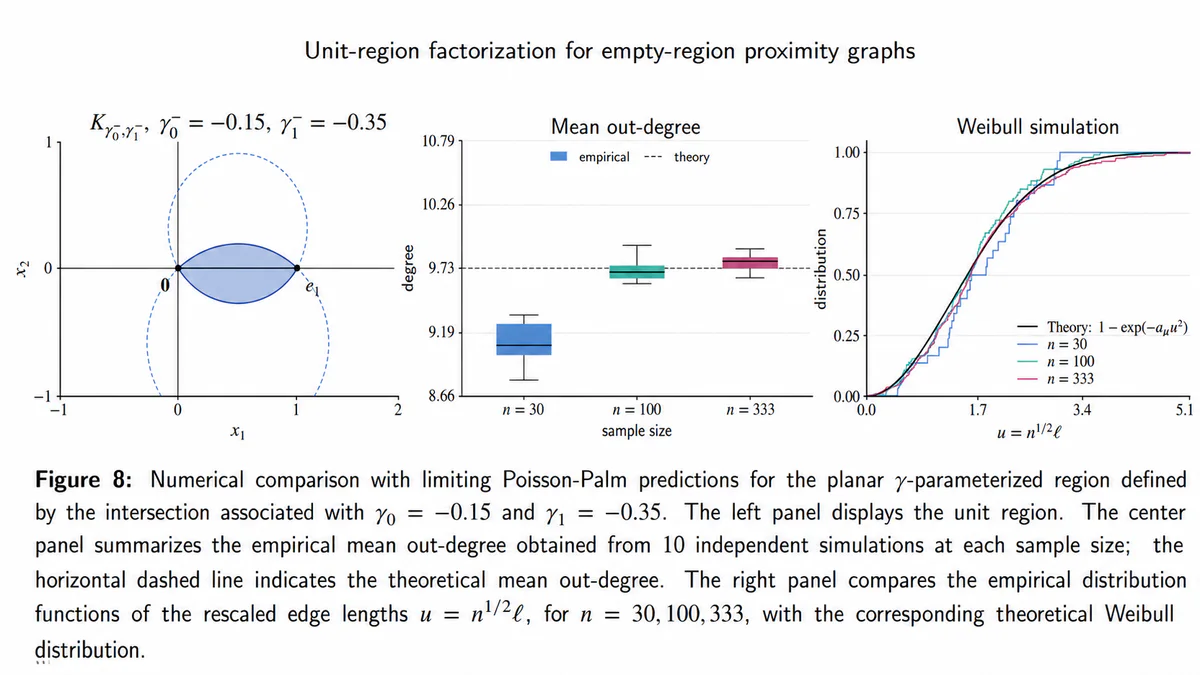
Numerical unit-region, mean out-degree, and Weibull simulation figure from Unit-Region Factorization for Empty-Region Proximity Graphs Manuscript
Under Review Elsevier · Discrete Applied Mathematics · Special Issue LAGOS 2025

Unit-Region Factorization for Empty-Region Proximity Graphs

A fixed-template empty-region rule assigns a Borel region \(S(p,q)\) to a candidate pair and retains the edge when that region contains no other site. The manuscript isolates the unit-volume constant \(a_K\) for similarity-copy regions and shows how the same scalar controls exact Poisson void probabilities, incident-edge length intensities, mean out-degree, and normalized incident-edge length laws.
stochastic geometryproximity graphsPalm theoryPoisson processes
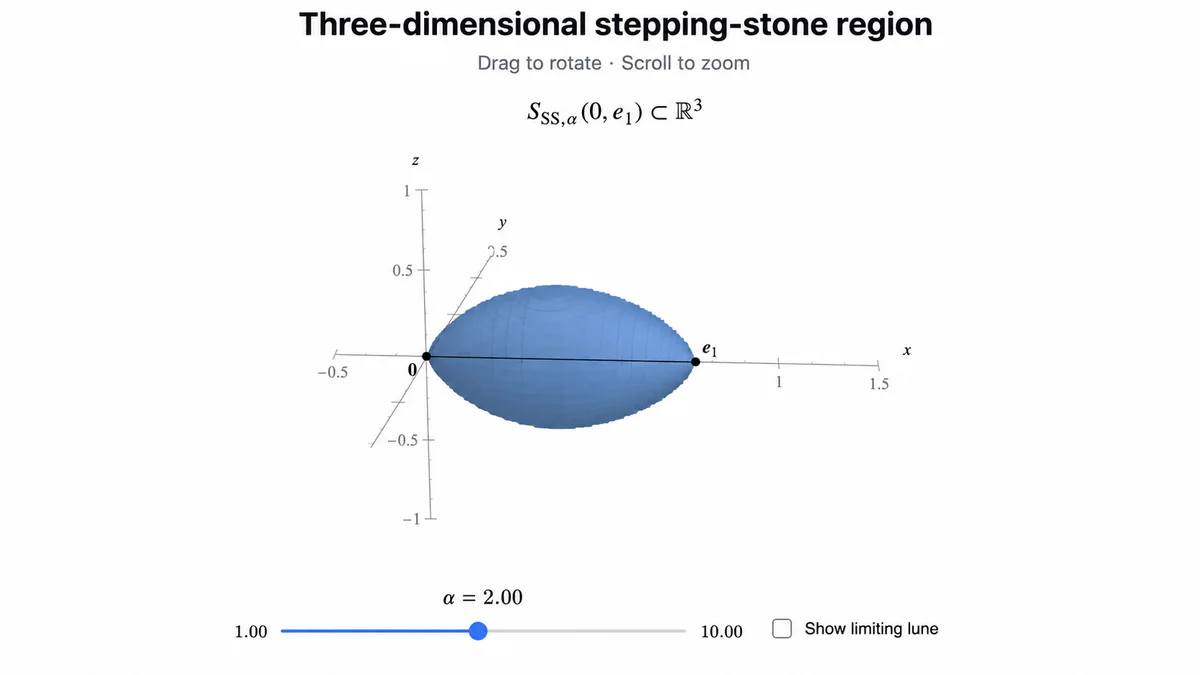
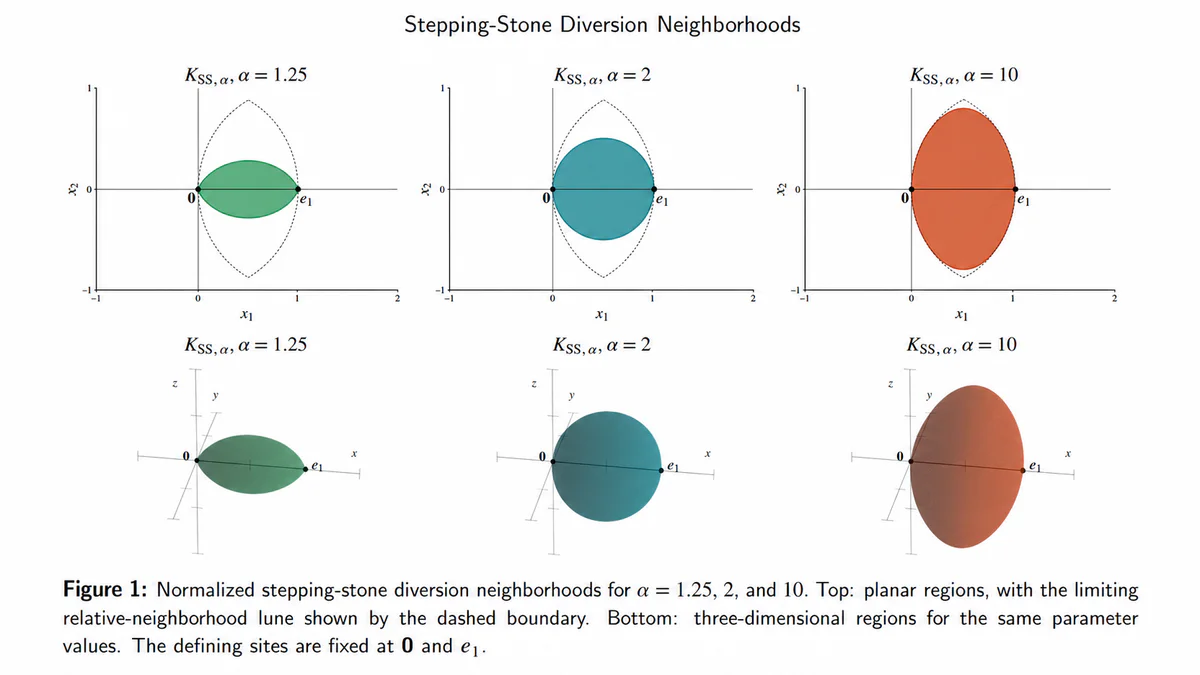
Planar and three-dimensional stepping-stone diversion neighborhoods for three parameter values Manuscript
Under Review Elsevier · Computational Geometry

Geometry and Volume of Stepping-Stone Diversion Neighborhoods in Euclidean Spaces of Arbitrary Dimension

This manuscript develops a geometric, graph-theoretic, and probabilistic analysis of the stepping-stone graph in \(\mathbb{R}^d\) for every \(d\geq 2\). It derives a normalized one-dimensional volume integral, recovers the degenerate and Gabriel cases and the relative-neighborhood limit, proves strict region and volume monotonicity, establishes graph inclusions and connectivity, and validates a stable quadrature formula by rejection sampling.

convex geometryvolume constantsempty regionsnumerical quadrature
Browse the complete papers archive

Selected projects

Projects

Research software for proximity graphs, quantitative finance, and computational geometry.

Selected research and software projects; see the full archive for every project and its materials.

Browse all projects
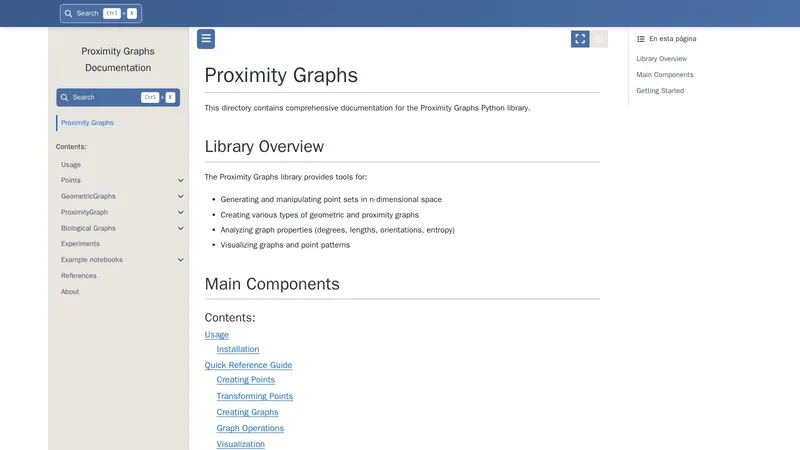
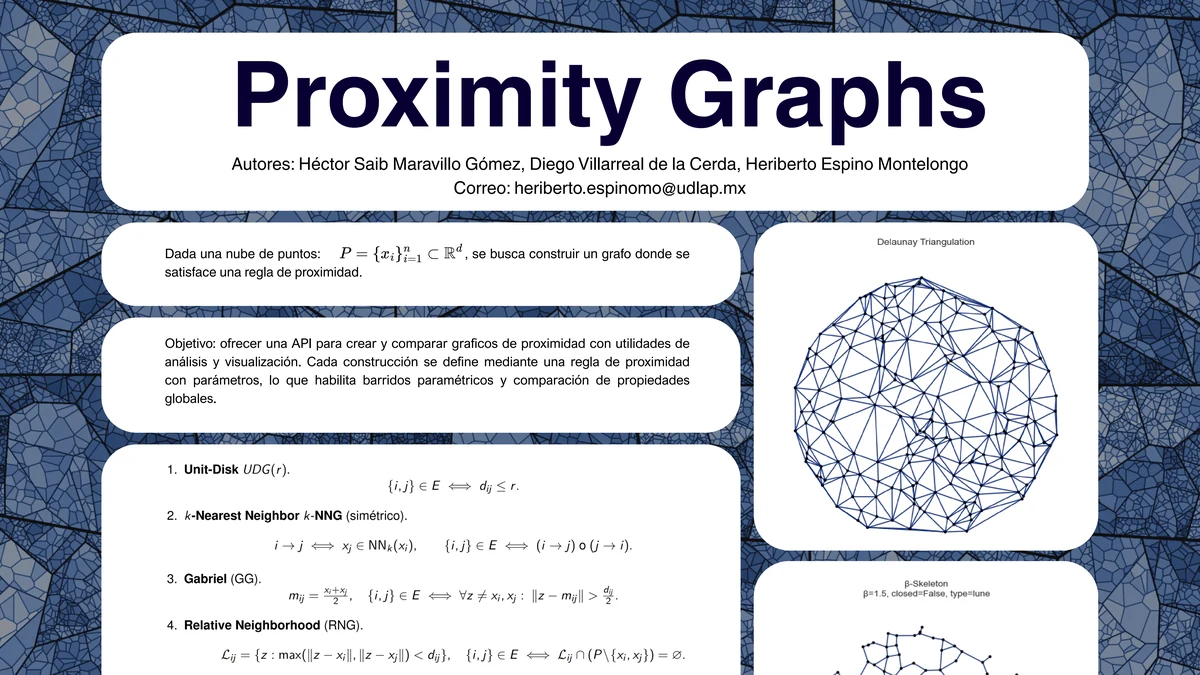
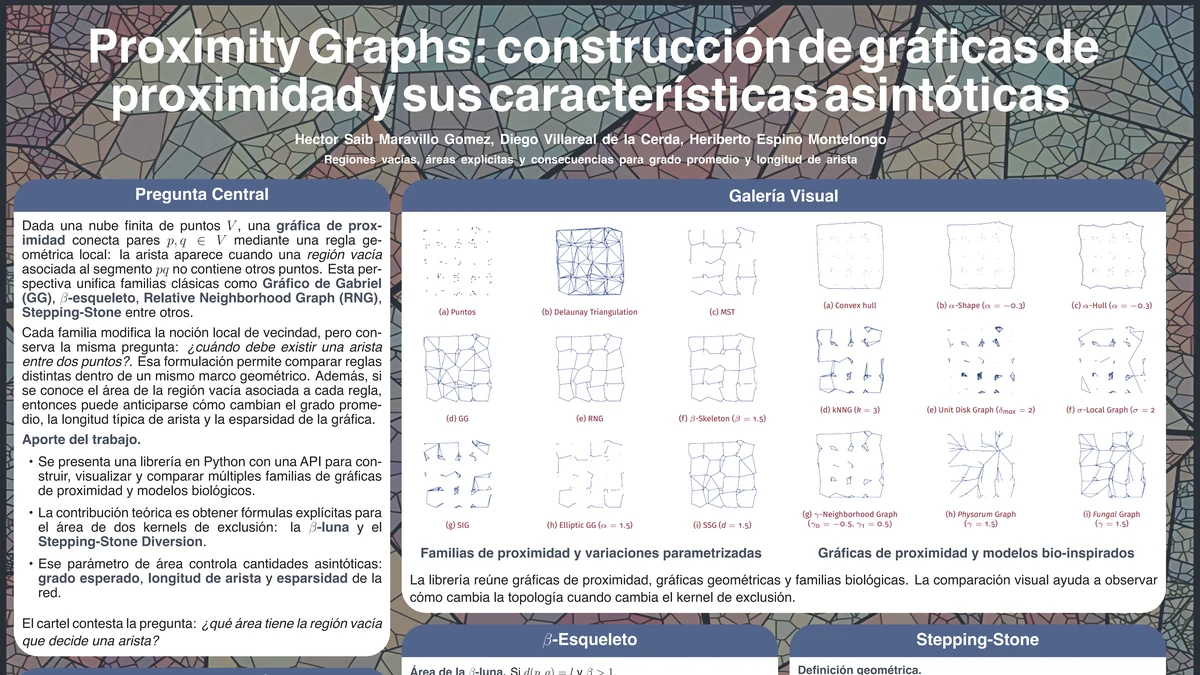
Proximity Graphs documentation homepage Applied / software
Software Library Public documentation

Proximity Graphs

Proximity Graphs is a Python library for generating and manipulating point sets, creating geometric and proximity graphs, analyzing graph properties, and visualizing graphs and point patterns.

computational geometryproximity graphsPythonvisualization
AbaQuant documentation homepage Applied / software
Software Library Public documentation

AbaQuant

AbaQuant is an applied actuarial and quantitative-finance Python library covering pricing models, financial mathematics, market data, credit analytics, portfolio construction, rate curves, visualizations, exportable reports, and provenance-aware result objects.

actuarial sciencequantitative financePythonfinancial mathematics
Browse the complete projects archive

Selected academic projects

Academic Projects

Course projects in actuarial modeling, quantitative finance, econometrics, and data analysis.

Selected academic and course projects are shown here; visit LinkedIn for certifications, awards, and additional academic activity.

Browse all academic projects
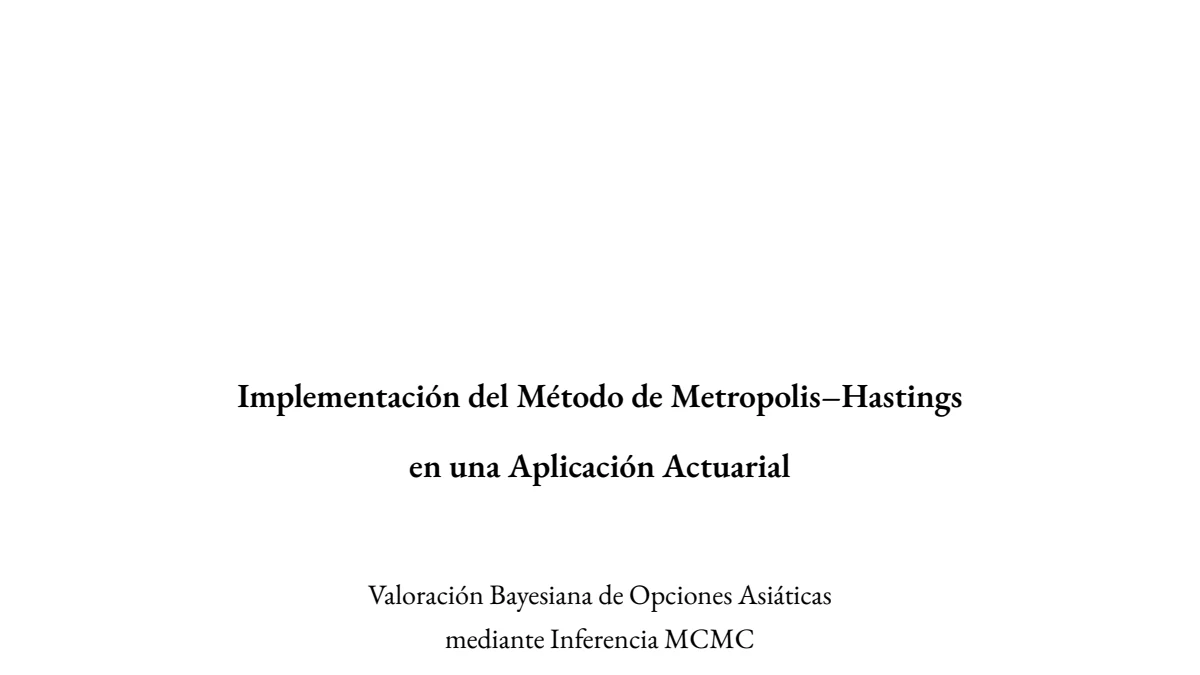
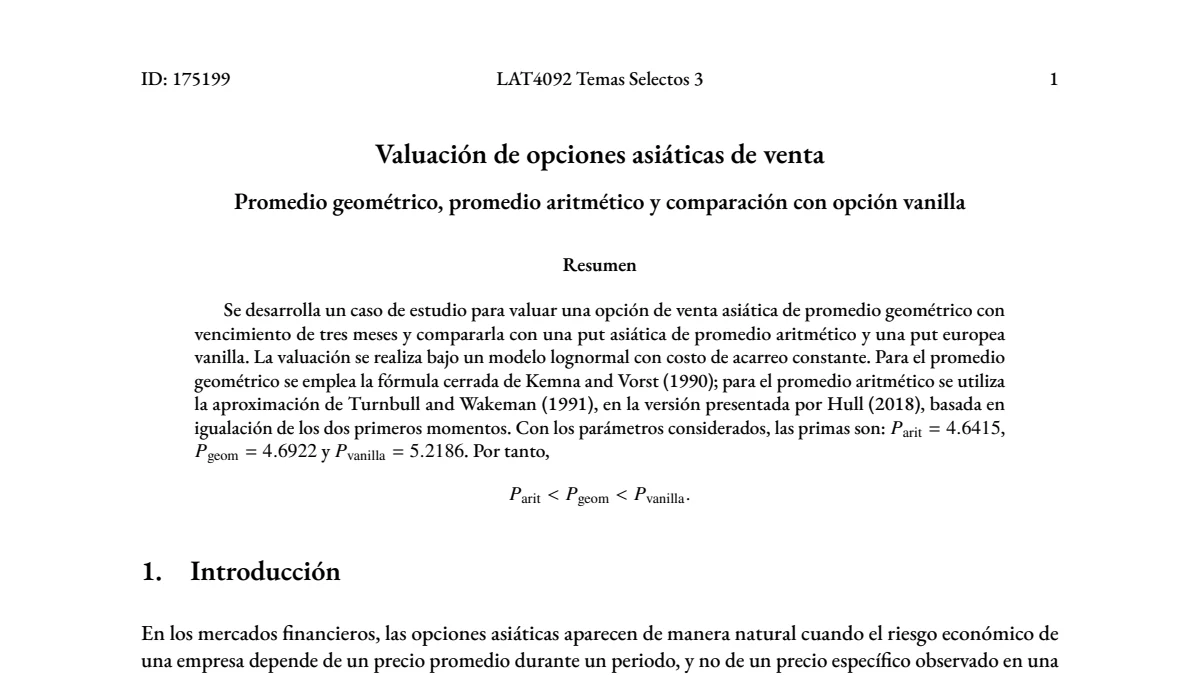
First page of the report on Bayesian Asian-option valuation with Metropolis-Hastings Course project
Course Project Actuarial Simulation

Bayesian Asian-Option Valuation with MCMC

Bayesian valuation study for Asian options using Metropolis–Hastings inference for geometric-Brownian-motion parameters and posterior simulation to propagate parameter uncertainty into option values.

Metropolis-HastingsBayesian inferenceAsian optionsactuarial simulation
Preview of the systemic liquidity-crisis agent-based model Course project
Course Project Agent-based modeling

Systemic Liquidity-Crisis Agent-Based Model

A computational laboratory for systemic liquidity stress. The model connects heterogeneous market participants, stochastic shocks, margin constraints, forced liquidation, stress metrics, and network fragmentation without fixing a public market description that remains under review.

agent-based modelssystemic riskliquidityfinancial markets
Browse the complete academic projects archive View certifications and awards on LinkedIn

Selected posters & presentations

Posters & Presentations

Visual academic materials from project work.

Selected visual academic materials are shown here; see the archive for all available posters and presentations.

Browse all materials
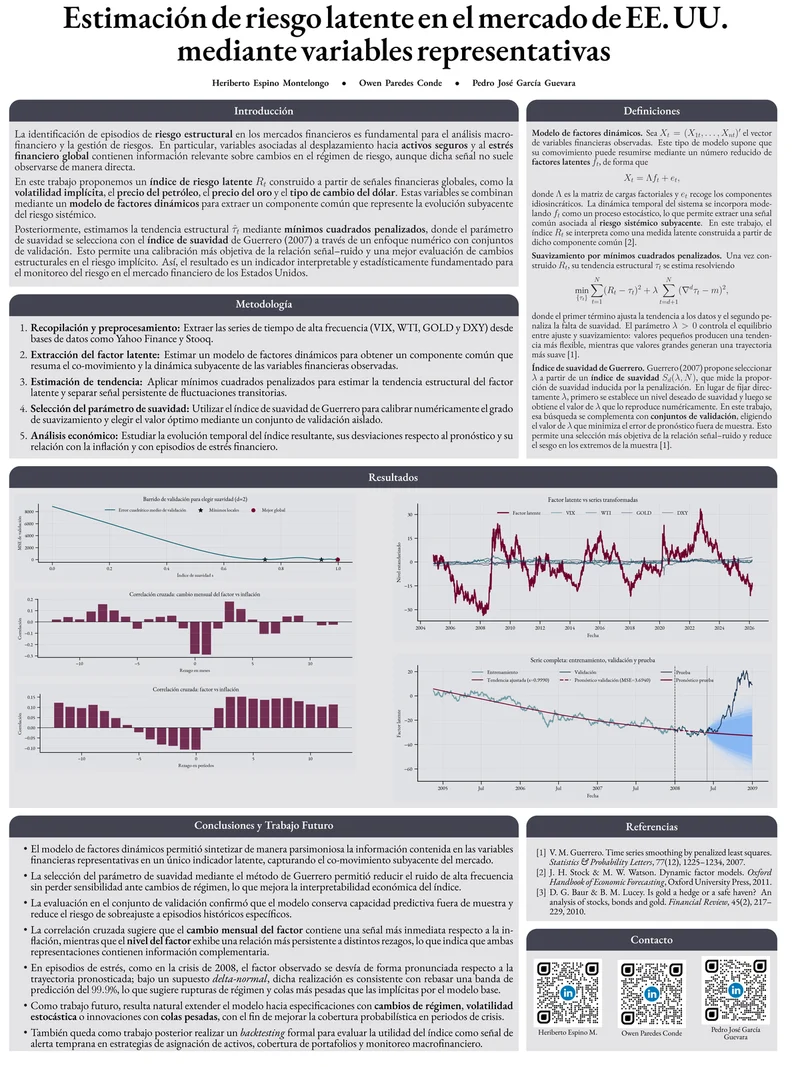
Preview of Latent Risk Estimation in the U.S. Market Course project
Course Project Latent risk index

Latent U.S. Market Risk

Poster project proposing a latent financial-risk index from representative global signals such as implied volatility, oil, gold, and the dollar index. The workflow combines dynamic factor modeling with penalized least-squares smoothing and Guerrero-style smoothness selection through validation.

dynamic factor modelslatent riskpenalized trendsmacrofinance
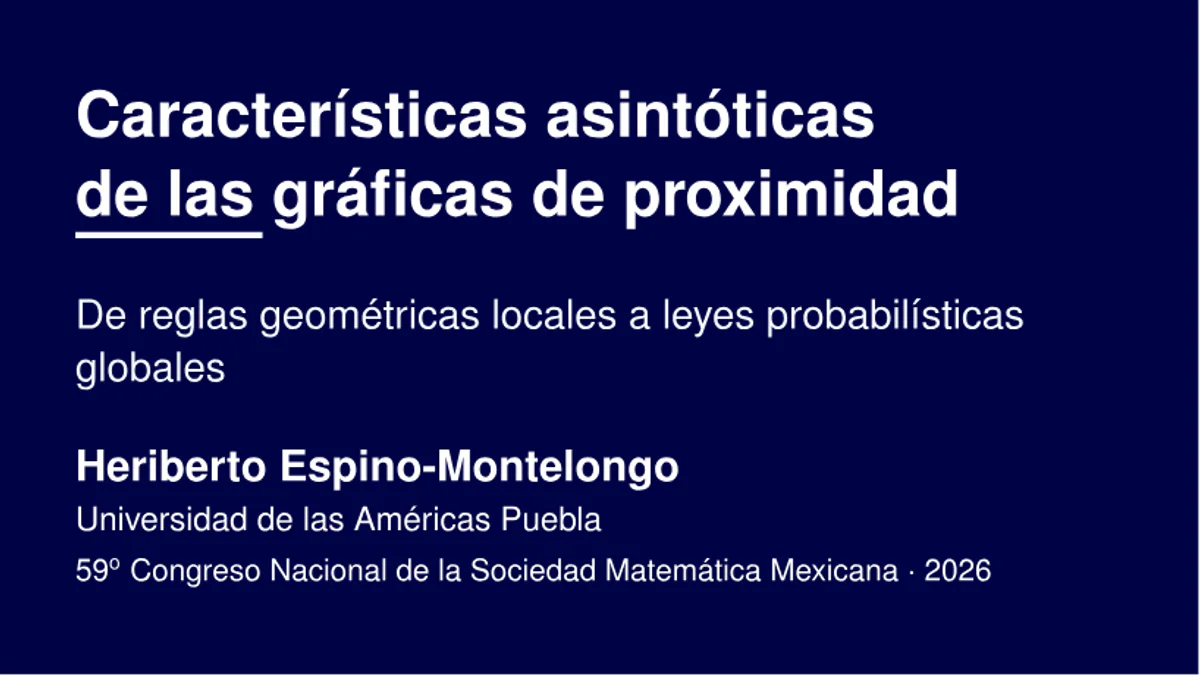
Title slide of Características Asintóticas de las Gráficas de Proximidad Academic presentation
Academic Presentation 59° Congreso Nacional de la Sociedad Matemática Mexicana

Asymptotic Characteristics of Proximity Graphs

Academic presentation connecting local geometric acceptance rules in proximity graphs with global probabilistic laws, using nearest-neighbor, Gabriel, relative-neighborhood, and Delaunay graphs as motivating examples.

proximity graphsstochastic geometryasymptoticsgeometric probability
Browse the complete posters & presentations archive

Notes

Notes

Mathematical notes developed through independent study and research preparation.

All currently available mathematical notes are shown here and maintained in the notes archive.

Open notes archive
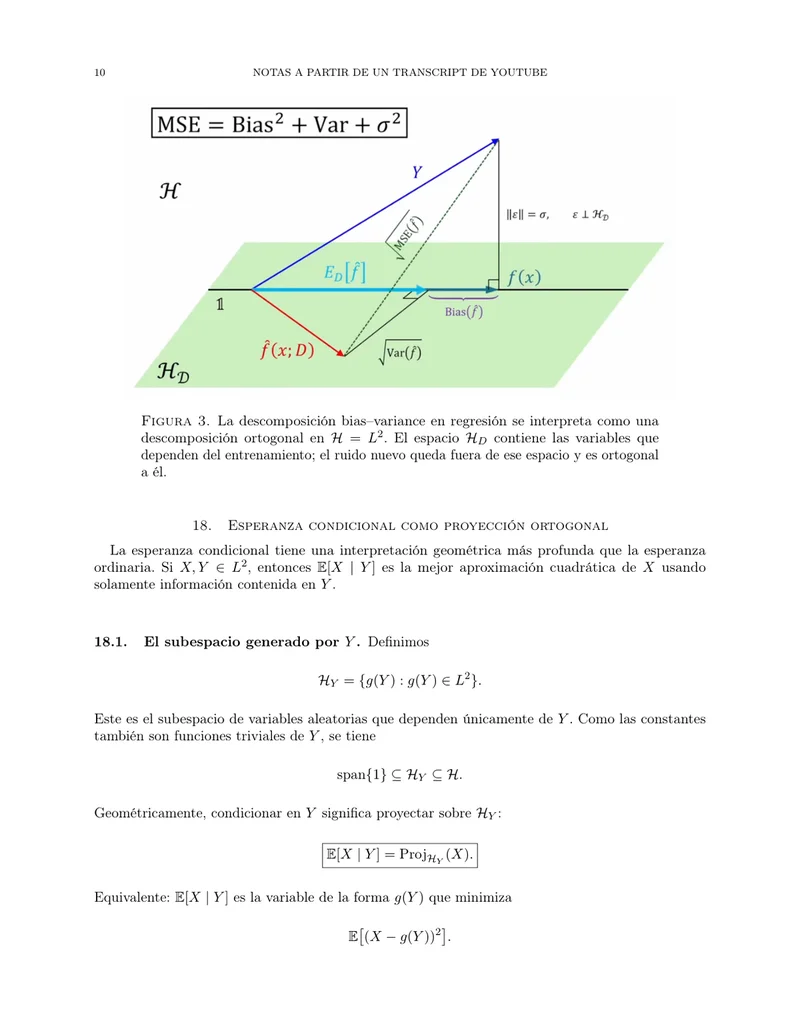
Preview of Random Variables as Vectors in L² Study notes
Notes In progress

Random Variables as Vectors in L²

In-progress notes formalizing random variables as vectors in the Hilbert space \(L^2(\Omega,\mathcal{F},\mathbb{P})\). They interpret expectation and conditional expectation as orthogonal projections, variance and bias-variance as Pythagorean decompositions, and Chapman-Kolmogorov as a tower-property identity.

$$ \mathcal{H}=L^2(\Omega,\mathcal{F},\mathbb{P}),\qquad \langle X,Y\rangle=\mathbb{E}[XY],\qquad \mathbb{E}[X\mid Y]=\operatorname{Proj}_{\mathcal{H}_Y}(X) $$
measure theoryprobabilityHilbert spacesMarkov chains
Open notes archive

Get in touch

Contact

Open to research, software, and academic collaboration.